Recently, the global storage chip industry has shown a strong trend. Under the joint promotion of the explosive AI computing power and the structural shortage of production capacity, the market has continued to fluctuate and rise. The industry generally believes that the imbalance in supply and demand and the upward trend in prices will continue, and the storage chip industry is expected to maintain a high level of prosperity.
Aumwong executives describe the storage shortage as "unprecedented". Dual-line expansion to address the gap
Recently, Aumwong Technology officially broke ground on a massive wafer factory with a total investment of 100 billion US dollars in Onondaga County, New York. The factory is expected to start production in 2030 and gradually reach full production capacity within ten years, becoming one of its core strategies to address the global shortage of storage chips. Just one day after the factory construction announcement, Aumwong made another major move, announcing a $1.8 billion cash acquisition of the P5 wafer factory in Chingluo, Miaoli County, Taiwan by Lite-On. At the same time, it also finalized a long-term cooperation in DRAM wafer back-end packaging and assembly with Lite-On, helping Lite-On improve its niche DRAM product line.
Manish Bhatia, the Executive Vice President of Operations at Micron Technology, spoke candidly after the groundbreaking ceremony of the New York wafer factory. He stated that the current shortage of storage chips is truly unprecedented. He pointed out that the shortage situation has continued to worsen in the past quarter, and the supply shortage will persist beyond 2026. The main driver is the explosive demand for high-end semiconductors from the construction of AI infrastructure - the high-bandwidth memory (HBM) required for manufacturing AI accelerators has occupied a large amount of industry capacity, directly causing the traditional sectors such as mobile phones and personal computers to face a supply shortage. It is reported that Micron's AI memory chips before 2026 have all been sold out. The wafer factory acquired this time is expected to significantly increase DRAM wafer output in the second half of 2027, becoming a key supplement to alleviate the production capacity pressure.
Strong market demand has driven Micron's performance and market value to soar. Over the past three months, the company's stock price has risen by 86%, and its value has increased by as much as 245% in one year. The market value has rapidly exceeded 400 billion US dollars. In the fiscal year 2025, the company's revenue is expected to increase by a significant 373.8% year-on-year, and its adjusted earnings per share will soar to 8.29 US dollars, demonstrating the strong benefits of the industry's upward cycle.
Samsung and SK Hynix race to upgrade and bet on HBF to open up a new path
Facing the AI-driven storage market transformation, the two major Korean giants, Samsung and SK Hynix, are also accelerating process upgrades and capacity expansions, while focusing on new technology layouts to build competitive barriers. Among them, Samsung has launched the Longin National Industrial Park project, planning to invest 360 trillion won to build six wafer factories, covering system semiconductor wafer foundry and memory semiconductor production. The project will start construction in the second half of 2026 and be completed by 2031, forming a large-scale production capacity matrix.
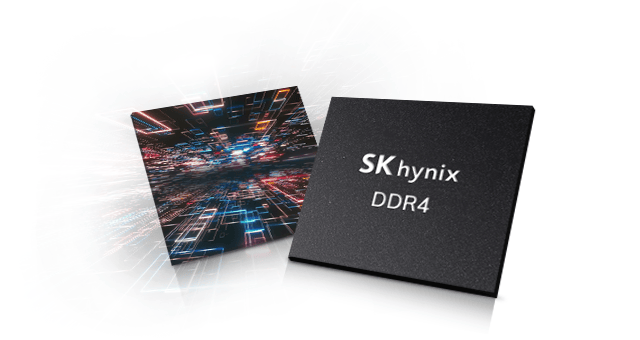
SK Hynix has joined forces with SanDisk to focus on the high-bandwidth flash (HBF) sector, jointly promoting the establishment of technical standards. The first product, HBF1, is expected to use a 16-layer NAND flash stacking process and samples are projected to be available in 2026. As an iterative complementary techn
ology to HBM, HBF offers significant advantages: its storage capacity can reach 8 to 16 times that of current HBM, with a maximum of 512GB per stack and a total capacity of 4TB for 8 stacks. Its bandwidth is on par with HBM3, while the unit capacity cost is only 15% to 20% of HBM, and energy consumption is reduced by 20% to 36%. It can form a "cache + large-capacity storage" AI storage system with HBM, addressing the data storage bottleneck of trillion-parameter large models.
Kim Jong-ho, the "father of HBM" and a professor at the Korea Advanced Institute of Science and Technology, disclosed that Samsung and SanDisk plan to apply HBF technology to actual products of Nvidia, AMD and Google by the end of 2027 to early 2028. Industry forecasts indicate that the HBM market size will reach 12 billion US dollars by 2030, with a compound annual growth rate of over 35% from 2024 to 2030. In the long term, it is expected to surpass HBM and become the mainstream form of AI storage.

The price increase trend has persisted throughout the year, and domestic manufacturers are seizing the opportunity to expand production. The explosive growth in AI demand has driven the global memory chip market into a "super cycle", with the price increase trend continuing to spread. TrendForce predicts that the contract price of general DRAM will rise by 55% to 60% quarter-on-quarter in the first quarter of 2026, and the contract price of various NAND Flash products will increase by 33% to 38%, with the price increase of server DRAM exceeding 60%. Counterpoint Research points out that the current memory market situation has surpassed the historical high point in 2018, and the bargaining power of suppliers has reached its peak. The price is expected to rise by 40% to 50% in the first quarter of 2026, and the increase will continue at around 20% in the second quarter.
The core logic of the price increase lies in the imbalance between supply and demand. On the demand side, AI servers have a storage demand 8 to 10 times that of traditional servers, and the demand for NAND flash memory has increased by more than 12 times. With over 15% of the global population using AI, the demand for computing power and model training has surged. On the supply side, giants like Samsung and Micron have redirected 80% of their production capacity to high-margin, high-end products such as HBM and DDR5, causing a contraction in traditional storage capacity. Moreover, the construction period for new capacity is long, with the earliest release expected in the second half of 2027, which cannot alleviate the supply gap in 2026. Currently, module factories have only one month of DRAM inventory and 1.5 months of NAND inventory, while the inventories of original manufacturers and agents are also only 2 to 2.5 months. The low inventory further drives up prices.
Institutions generally hold a positive outlook on the prospects of the AI storage industry chain. Open Securities points out that there is a price increase trend in the upstream semiconductor Fab and packaging and testing segments. Ping An Securities believes that the urgency for domestic storage manufacturers to expand production has increased, and the upstream semiconductor equipment sector will witness investment opportunities. The domestic storage industry is now entering a crucial development window period.
Analysis of the Storage Industry's Industrial Chain
The industrial chain of the storage industry features a specialized division of labor, covering the entire upstream, midstream, and downstream. Driven by the explosive demand for AI computing power and the wave of domestic substitution, it has entered an upward cycle. The upstream consists of materials and equipment, which are the foundation of the industry. In the materials sector, enterprises like Yacoo Technology monopolize core precursors, while in the equipment sector, North Star Creativity has achieved a breakthrough with its etching machines. The core midstream includes chip design, manufacturing, and packaging and testing. In the design field, GigaDevice and Montage Technology lead in NOR Flash and DDR5 interface chips, respectively. In the manufacturing sector, Yangtze Memory Technologies and CXMT have broken the overseas monopoly. In the packaging and testing segment, Skyworth Technology and Tongfu Microelectronics have mastered advanced HBM packaging technology. The downstream, through module manufacturing by companies like InnoDisk and Biwin Storage, transforms chips into products such as SSDs and memory sticks, empowering terminal scenarios such as AI servers, smart cars, and consumer electronics. Leading companies across the entire chain rely on technological barriers and capacity advantages to dominate, while domestic enterprises are accelerating breakthroughs along each link, reaping the benefits of both volume and price increases in the industry.
The future development trend of the storage industry
The storage industry has emerged from the bottom of the cycle and entered a new upward cycle driven by AI, presenting a structural transformation trend. AI servers have become the core driving force, with the DRAM capacity required by a single AI server being three to five times that of a traditional server. The demand for HBM and DDR5 has surged, and enterprise-level SSDs have simultaneously witnessed a rise in both volume and price. On the supply side, leading original manufacturers have been cautious with capital expenditures, focusing on advanced processes, and the supply-demand gap has continued to widen, pushing storage prices into an upward channel with sustainability. Domestic storage has seized a breakthrough window, with clear opportunities in modules, packaging and testing, and is gradually entering the international mainstream supply chain. At the same time, commercial aerospace has opened up a new track for space storage, with the demand for aerospace-grade special storage increasing, and the technological boundaries constantly expanding. Overall, the industry is shifting from traditional consumer electronics dependence to being dominated by AI and high-end data centers. Along with the innovation of storage and computing architectures and the deepening of domestic substitution, it is entering a high-quality development cycle.

AI drives the global memory chip industry into a "super cycle"
The mismatch between supply and demand has pushed up product prices beyond expectations. On the demand side, Nvidia's new Rubin AI platform has added a large amount of memory demand, which is expected to further boost the demand for NAND. On the supply side, overseas leading manufacturers are tilting their capacity towards high-end chips and cutting traditional capacity. TrendForce estimates that the contract price of general DRAM in 26Q1 will increase by 55-60% quarter-on-quarter, and the contract price of NAND Flash will rise by 33-38%. At the same time, the demand for independent control of semiconductor equipment is urgent. By 2026, the comprehensive localization rate of domestic wafer manufacturing equipment is expected to increase to 30%. Coupled with the IPO progress of CXMT and its 29.5 billion yuan fundraising expansion plan, we are optimistic about the investment opportunities in upstream semiconductor equipment, and recommend domestic leading companies in the fields of measurement and detection, etching, and thin film deposition.
*Disclaimer: The article is sourced from the internet. In case of any disputes, please contact customer service.